Mastering EU Compliance Essentials for Business Success in 2026
Navigating the complex landscape of European Union regulations challenges many businesses. Compliance is not optional. It protects companies from legal risks and fines. It also builds trust with customers and partners. Mastering EU compliance essentials ensures smooth operations and long-term growth.
Understanding EU Compliance Essentials
EU compliance covers a broad range of rules. These rules affect data protection, product safety, environmental standards, labor laws, and more. Each sector faces specific regulations. Companies must identify which rules apply to their operations.
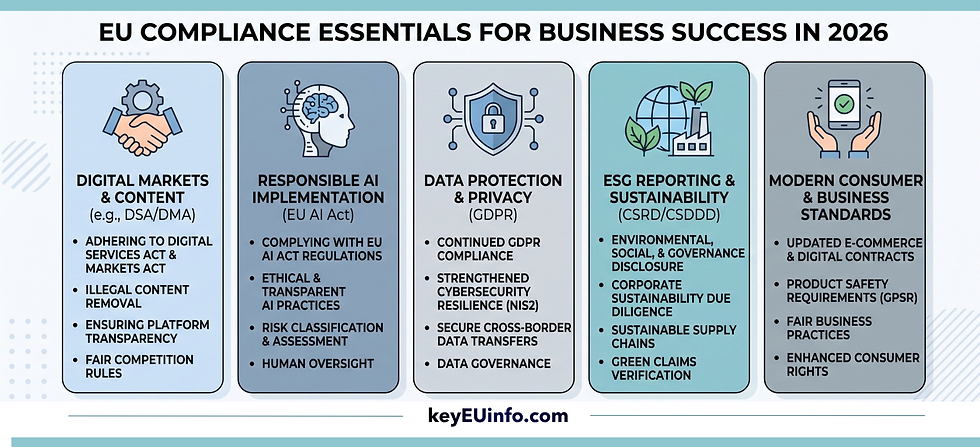
Key areas include:
Data Protection: The General Data Protection Regulation (GDPR) governs how businesses handle personal data.
Product Compliance: CE marking certifies products meet EU safety and environmental standards.
Environmental Regulations: Directives on waste management, emissions, and energy efficiency impact manufacturing and logistics.
Labor Laws: Rules on working hours, employee rights, and workplace safety apply across member states.
Businesses must stay updated on changes. Non-compliance can lead to penalties, product recalls, or bans.
What is European Compliance?
European compliance means adhering to the laws and standards set by the European Union. It ensures that businesses operate fairly and safely within the single market. Compliance covers legal, technical, and ethical requirements.
European compliance involves:
Legal conformity: Following laws such as GDPR, REACH (chemical safety), and the Machinery Directive.
Technical standards: Meeting product and service standards for safety and interoperability.
Ethical practices: Upholding transparency, anti-corruption, and fair competition rules.
Companies must document compliance efforts. This includes maintaining records, conducting audits, and training staff. Compliance is an ongoing process, not a one-time task.
Key Steps to Achieve Compliance
Businesses should take a structured approach to compliance. Steps include:
Identify Applicable Regulations | Analyse the business model and products to determine relevant EU laws. |
Conduct Risk Assessments | Evaluate areas where non-compliance risks are highest. |
Develop Compliance Policies | Create clear guidelines and procedures aligned with EU standards. |
Implement Training Programs | Educate employees on compliance requirements and responsibilities. |
Monitor and Audit | Regularly review processes and correct any gaps. |
Engage with Experts | Consult legal and compliance professionals for complex issues. |
Use Technology Tools | Employ software for data protection, reporting, and document management. |
Following these steps reduces the chance of violations and improves operational efficiency.
Practical Examples of Compliance in Action
A manufacturing company ensures all products carry the CE mark before entering the EU market. It conducts regular product testing and maintains technical files.
An online retailer implements GDPR-compliant data handling. It updates privacy policies, obtains user consent, and secures customer data.
A logistics firm adopts environmental standards by optimizing routes to reduce emissions and complies with waste disposal regulations.
A service provider trains staff on anti-corruption laws and maintains transparent financial records.
These examples show how compliance integrates into daily operations. It requires commitment and resources but prevents costly legal issues.
Many companies turn to specialized providers for support. These services offer expertise in navigating EU regulations. They help with audits, documentation, training, and ongoing monitoring.
Using professional compliance services can:
Save time and reduce errors.
Provide up-to-date regulatory insights.
Enhance credibility with regulators and customers.
Allow focus on core business activities.
Choosing the right partner depends on industry, company size, and specific compliance needs.
Staying Ahead in a Changing Regulatory Environment
EU regulations evolve frequently. Businesses must adapt quickly to new rules and interpretations. Strategies to stay ahead include:
Subscribing to official EU regulatory updates.
Participating in industry associations and forums.
Investing in continuous employee education.
Reviewing and updating compliance programs regularly.
Proactive compliance management minimizes disruptions and supports sustainable growth.
Mastering EU compliance essentials is critical for any business operating in or with the European Union. It demands attention, discipline, and expert knowledge. The rewards are legal security, market access, and a strong reputation.
FAQ about EU Compliance Essentials for Business Success in 2026
What are the key areas of EU compliance businesses should focus on in 2026? Businesses should prioritize data protection, environmental regulations, labor laws, and consumer rights.
How can companies ensure they are compliant with GDPR? Companies can ensure compliance by implementing robust data management practices and regularly reviewing their data handling processes.
What role does sustainability play in EU compliance? Sustainability is crucial as the EU emphasizes green policies, requiring businesses to adopt eco-friendly practices.
Why is employee training important for compliance? Employee training is vital to ensure that all staff understand compliance requirements and can adhere to them effectively.
What are the consequences of non-compliance in the EU? Non-compliance can lead to significant fines, legal repercussions, and damage to a company’s reputation.
EU Compliance Essentials for Business Success in 2026


Comments